

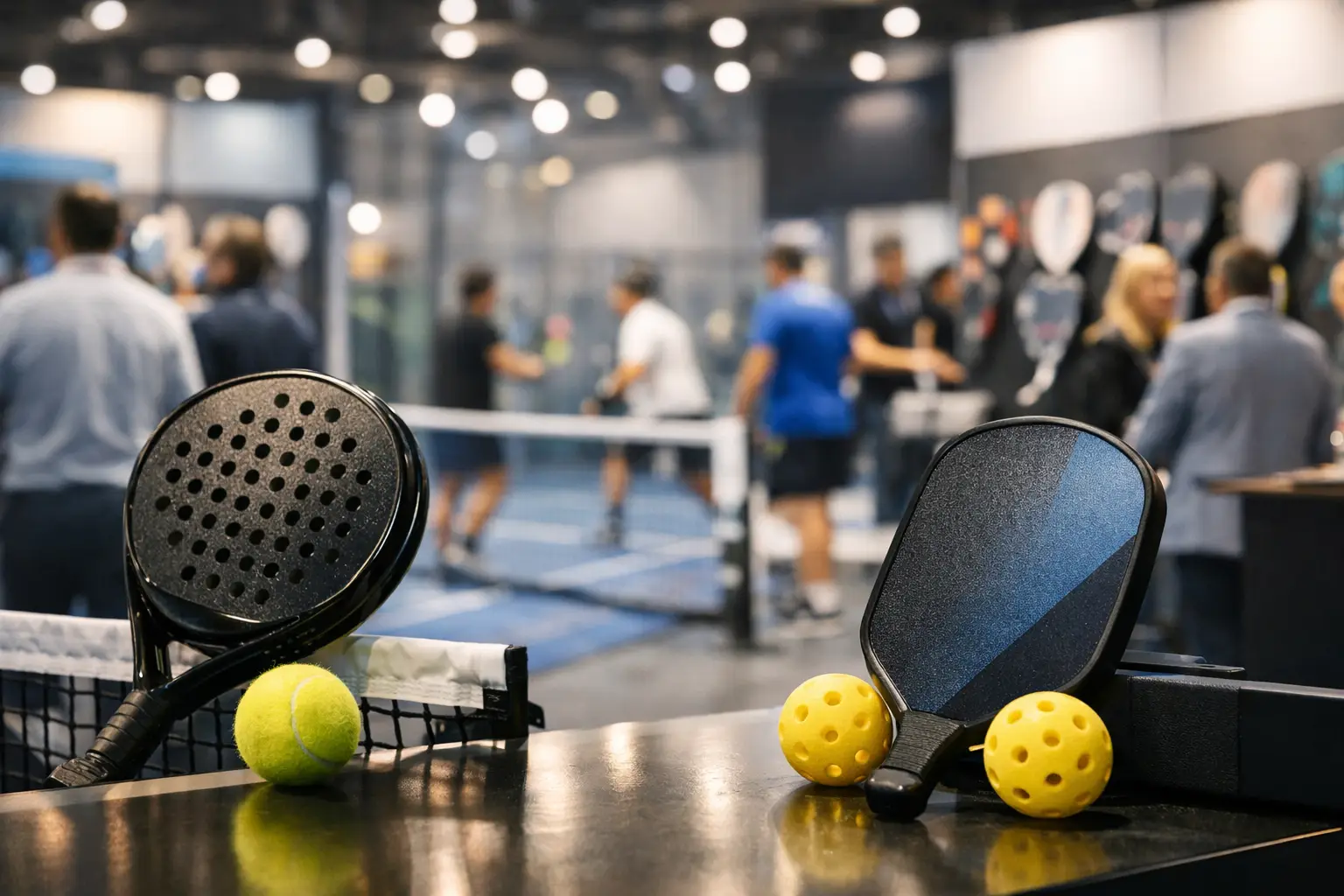
Why a Padel and Pickleball Expo Matters
The biggest opportunities in racket sports rarely happen on a quiet court. They happen where founders meet buyers, where facility operators compare concepts, where coaches spot trends early, and where fans get direct access to what is coming next. That is exactly why a padel and pickleball expo is no longer a side event. It is becoming one of the clearest signals of where the market is headed.
Pickleball has already proven its scale in the US. Padel is building fast, drawing investor interest, club development, and premium facility conversations in major markets. Put those two forces in the same room, and the result is more than crowd energy. It is a live marketplace for participation, partnerships, education, and commercial momentum.
What a padel and pickleball expo really represents
A serious expo in these categories is not just a fan festival with a few product booths and celebrity appearances. At the top end, it functions as an industry platform. Brands launch equipment. Clubs evaluate surfaces, fencing, and technology. Tournament operators compare event models. Media tracks the storylines shaping the next phase of growth. Investors gauge where participation is turning into infrastructure and revenue.
That matters because both sports are in active expansion, but they are not in the same stage of maturity. Pickleball has broad US awareness, an established player base, and a fast-growing ecosystem of equipment, coaching, and organized play. Padel, by contrast, often enters the conversation through real estate, private clubs, hospitality, and premium urban development. A shared expo creates a rare point of contact between mass adoption and emerging upside.
For exhibitors, that overlap is valuable. A paddle brand may find a wider audience than expected. A court builder may meet both municipal pickleball buyers and private padel developers. A software company serving clubs may discover that both sports need the same booking, membership, and event-management infrastructure. The crossover is not theoretical. It is commercial.
Why the padel and pickleball expo model is gaining traction
The timing is not accidental. Sports businesses are chasing categories with strong participation curves, strong community behavior, and strong sponsor potential. Pickleball checks those boxes already. Padel is increasingly viewed as a global growth play with long-term US runway. Bringing them together creates a stronger business case for attendance, sponsorship, and media coverage.
There is also a practical reason. Many of the same stakeholders are now circling both spaces. Developers, venue operators, investors, sports marketers, and equipment companies do not always think in single-sport silos. They are looking at utilization, demographics, pricing, programming, and customer lifetime value. An expo that captures both sports reflects how decisions are actually being made.
That does not mean the audiences are identical. They are not. Pickleball still reaches more community-based, public-access, and recreational segments. Padel often skews more premium, social, and club-oriented in the US market. But that distinction is part of the appeal. The strongest expos do not flatten the differences. They put them on display so attendees can understand where each sport fits and where each one may outperform.
Who gets the most value from attending
For brands, the value starts with concentration. Instead of chasing fragmented meetings across events, regions, and digital outreach, an expo puts decision-makers, consumers, media, and potential partners in one environment. That shortens sales cycles and sharpens market feedback.
For facility owners and developers, the upside is even more immediate. A well-built event floor offers side-by-side exposure to court systems, lighting, turf and surface options, fencing, tech integrations, seating concepts, and programming partners. Seeing those solutions live is different from reviewing a deck or taking a video call. It helps operators compare quality, ask tougher questions, and understand operational trade-offs before capital is committed.
Coaches and serious players get a different form of access. They can evaluate gear, connect with elite talent, attend education sessions, and see how training, competition, and youth development are evolving. For this group, the expo is not just about shopping. It is about staying current in a market that is moving quickly.
Sponsors and media benefit from visibility and timing. New sports stories are most powerful when they are still gathering force. A padel and pickleball expo creates a stage for announcements, data points, personalities, and trend lines that can shape coverage long after the event ends.
What separates a serious expo from a crowded event hall
Scale alone is not enough. A packed room can still be poorly targeted. The best events are built around intention. They attract the right mix of exhibitors, buyers, operators, investors, coaches, and fans, then give those groups reasons to engage beyond casual foot traffic.
That usually means conference programming matters as much as the exhibition floor. If sessions are strong, attendees stay longer, return for multiple days, and move between education and commerce more naturally. If programming is weak, the event becomes transactional and forgettable.
The same is true for floor design. High-value expos think carefully about traffic flow, product categories, activation zones, demo opportunities, and visibility for sponsors. A good floor plan does not just sell booth space. It creates discovery. That matters when brands are competing for attention in a rapidly expanding market.
Competition and special programming also play a role. Awards, corporate challenges, youth showcases, instructor clinics, and live play can turn passive interest into direct engagement. The right mix depends on the audience. Too much spectacle can dilute business outcomes. Too little energy can make the event feel flat. The balance is where strong organizers separate themselves.
The business case behind a combined event
There is a larger strategic argument for putting both sports under one roof. It broadens the total addressable audience while still staying within a coherent racket-sport universe. That makes the event more attractive to exhibitors that want scale, but it also creates richer pathways for market education.
A pickleball-centric operator may leave with a clear view of whether padel belongs in a future expansion plan. A padel investor may gain a sharper understanding of how pickleball built its participation engine so quickly. A consumer brand may realize that messaging, price positioning, and retail strategy need to differ across both categories. These are not abstract insights. They affect capital allocation, product development, and partnership strategy.
There are trade-offs, of course. A combined expo has to avoid treating one sport as an afterthought. If the programming, exhibitors, or floor presence feel lopsided, attendees will notice. The strongest event producers solve that by building distinct relevance for each audience while highlighting where the markets intersect.
That is where leadership matters. An expo has to do more than rent a hall and sell badges. It has to frame the conversation, attract the right caliber of participation, and create the conditions for meaningful business to happen. When that is done well, the event stops being just another date on the calendar. It becomes a market signal.
Why this moment matters for the industry
Racket sports are entering a more competitive phase. Early growth stories are exciting, but they eventually give way to tougher questions. Which facilities are sustainable? Which brands have staying power? Which formats drive repeat participation? Which sponsors are making long-term bets instead of testing the waters?
A strong expo helps answer those questions in public. It gives the market a place to measure itself. That is part of what makes these gatherings influential. They do not just reflect momentum. They help organize it.
For companies looking to lead, visibility matters. For buyers, timing matters. For players and fans, access matters. And for an industry trying to define its next chapter, shared space matters most of all. A platform like World Pickleball Convention can sit at that intersection, where brand activation, education, networking, and serious growth stop being separate goals and start working together.
The real opportunity inside a padel and pickleball expo
The headline attraction is easy to understand - two fast-rising sports, one high-energy environment, major visibility. But the deeper opportunity is concentration of momentum. The right people, products, ideas, and capital show up in one place, and that creates a different level of possibility.
Some attendees will come to close deals. Some will come to study the field. Some will come to be seen before the market gets more crowded. All of them are reacting to the same reality: these sports are not standing still, and the businesses around them cannot afford to stand still either.
The most valuable events meet that moment with scale, authority, and clear commercial purpose. If you want to understand where racket sports are growing next, do not just watch the headlines. Watch who shows up, what gets built, and what conversations take over the floor.


Comments